
Dispu
Dispu is a chargeback management web application that empowers merchants to fight fraud with clarity, automation, and confidence. The platform streamlines dispute workflows, provides real-time performance insights, and reduces financial losses through intelligent tools and modern interface design.

Project Overview
Dispu is a chargeback management web application designed to help merchants take control of disputes with clarity, speed, and automation. The platform provides a comprehensive suite of tools to fight fraud, reduce chargeback exposure, and streamline dispute workflows. The objective was to create a modern, intuitive interface that simplifies complex financial processes while empowering merchants with real-time visibility and actionable insights. The design combines deep payments expertise with smart automation to eliminate friction and improve operational efficiency.
Problem Statement
Merchants often struggle with fragmented chargeback processes, manual workflows, and limited visibility into dispute performance. Dispu required a centralized, intelligent platform to simplify complex financial data, accelerate response times, and reduce losses caused by fraud and friendly chargebacks.


User Experience Process
The user journey was designed around clarity and control. Key workflows such as reviewing disputes, submitting evidence, and tracking ROI performance were simplified into structured, predictable flows. Conducted competitive analysis of fintech dashboards and dispute management platforms to identify best practices in data visualization, workflow clarity, and performance tracking.
The experience prioritizes
Clear navigation between dashboards and dispute queues \ Logical grouping of KPIs and metrics \ Reduced friction in evidence submission \ Fast access to high-priority alerts \ Dashboard hierarchy
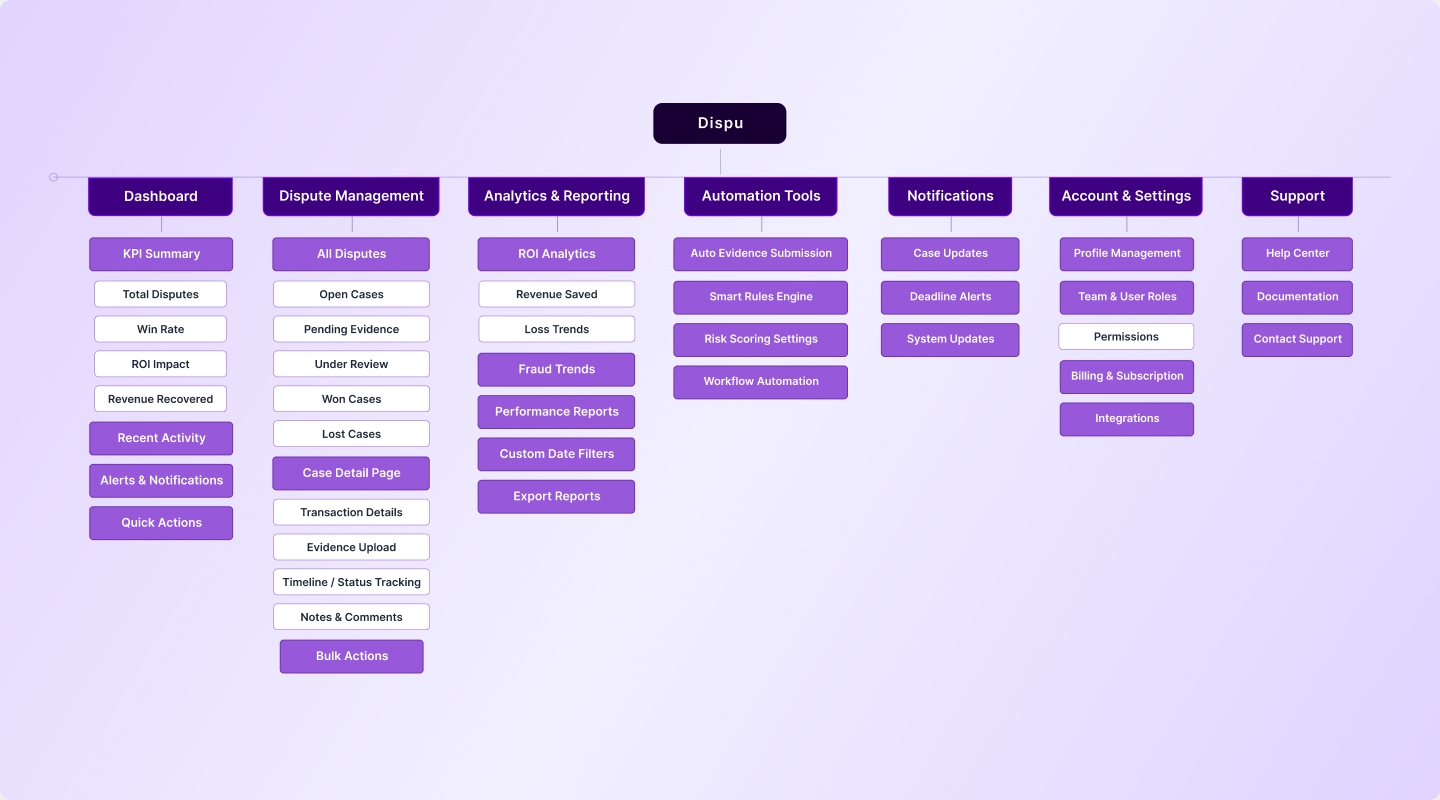
The architecture was structured to separate analytics, dispute management, and account operations while maintaining seamless movement between them.
Primary structure included
Dashboard \ Disputes - Open Cases, Pending Evidence, Won / Lost Cases \ Analytics - ROI Metrics, Fraud Trends Performance Reports \ Automation Tools \ Notifications \ Account & Settings
The hierarchy ensures users can move from overview → detailed case → action in minimal steps.
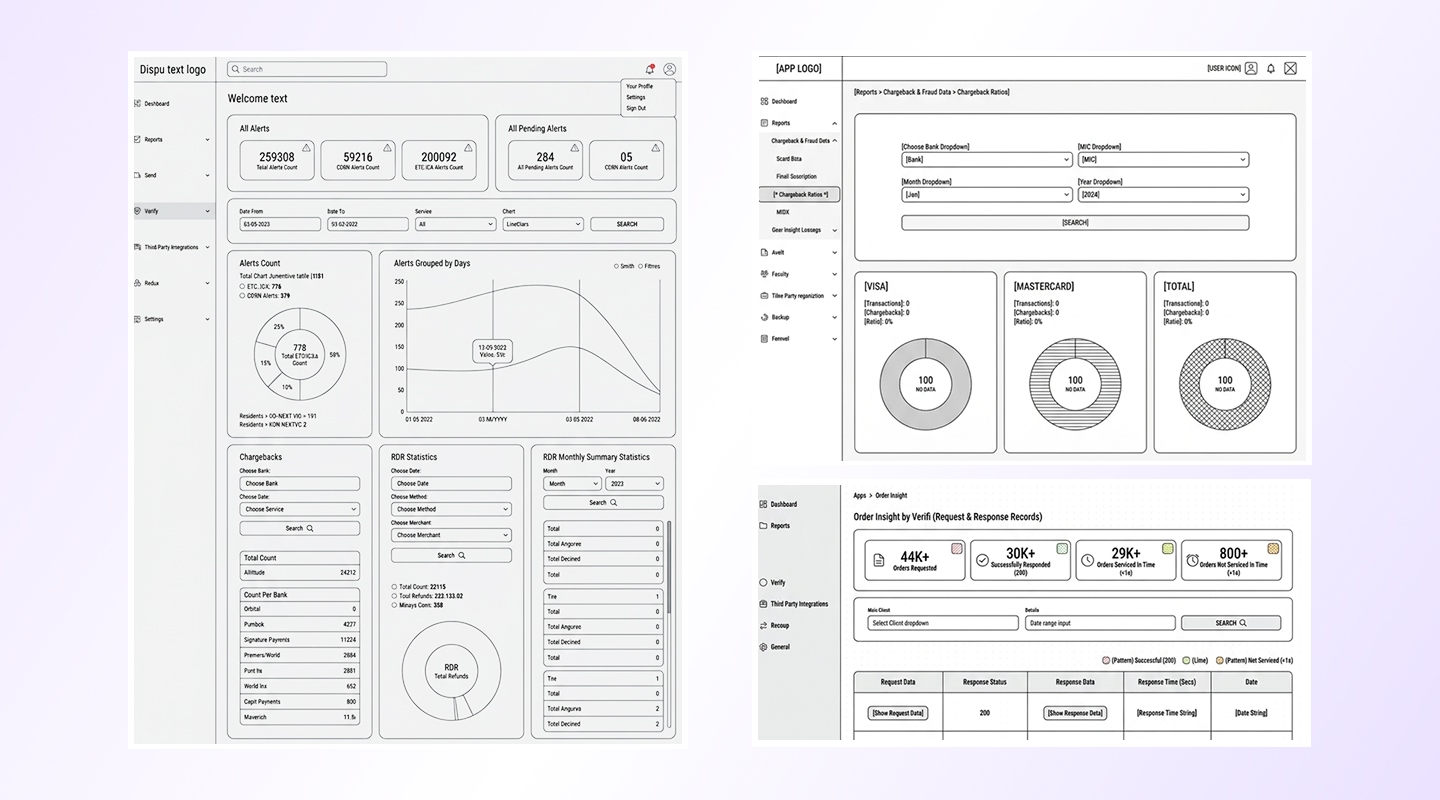
Wireframes focused on validating usability, data clarity, and interaction efficiency before applying visual design.
Wireframes covered
Dashboard KPI placement \ Chart positioning and scaling \ Dispute list layouts \ Case detail structure \ Multi-step evidence submission flow \ Filter and search behavior \ Notification and alert patterns
Design System
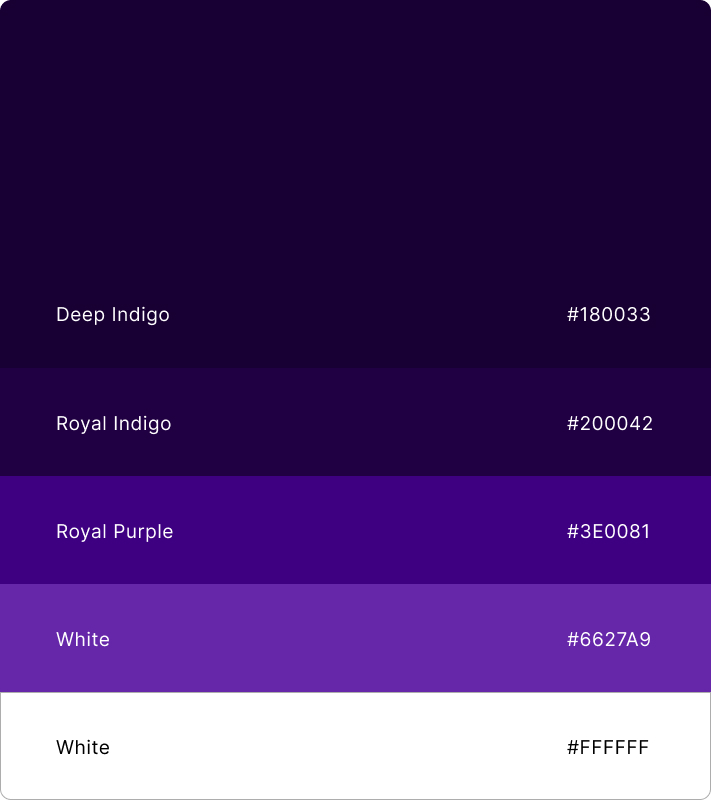
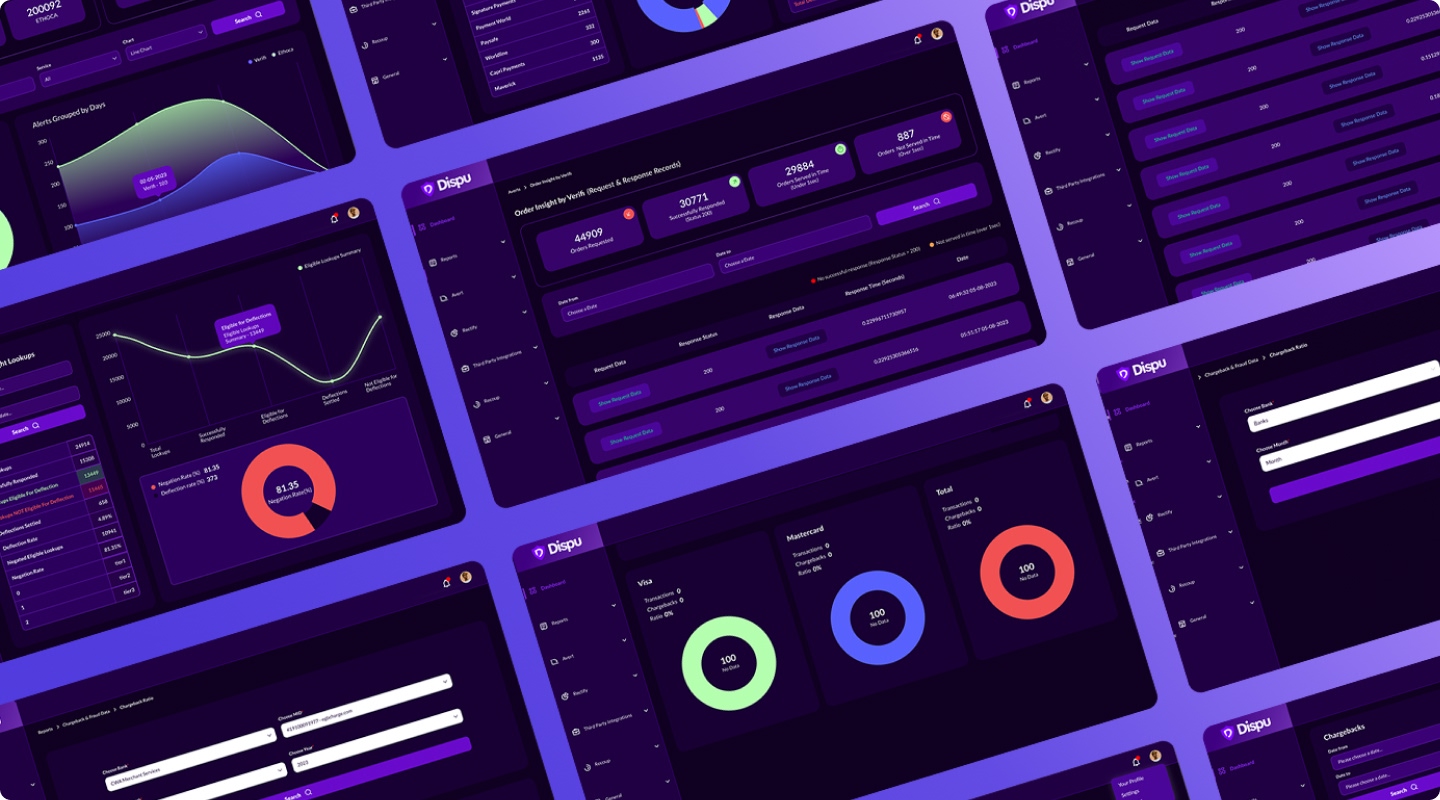
A scalable design system was developed to ensure consistency across data-heavy interfaces while maintaining clarity and usability. The Deep Indigo and Royal Purple palette reinforces trust and fintech authority, while high-contrast accents highlight key metrics and actions. A modular component library-including dashboard cards, charts, tables, forms, and notification states-was created to support scalability and structured hierarchy across the platform.
Deep Indigo & Royal Purple color palette to reflect fintech authority \ High-contrast UI components for data readability \ Modular card-based dashboard system \ Consistent typography scale for hierarchy \ Structured spacing system to reduce visual overload \ Reusable chart and table components

UI Design
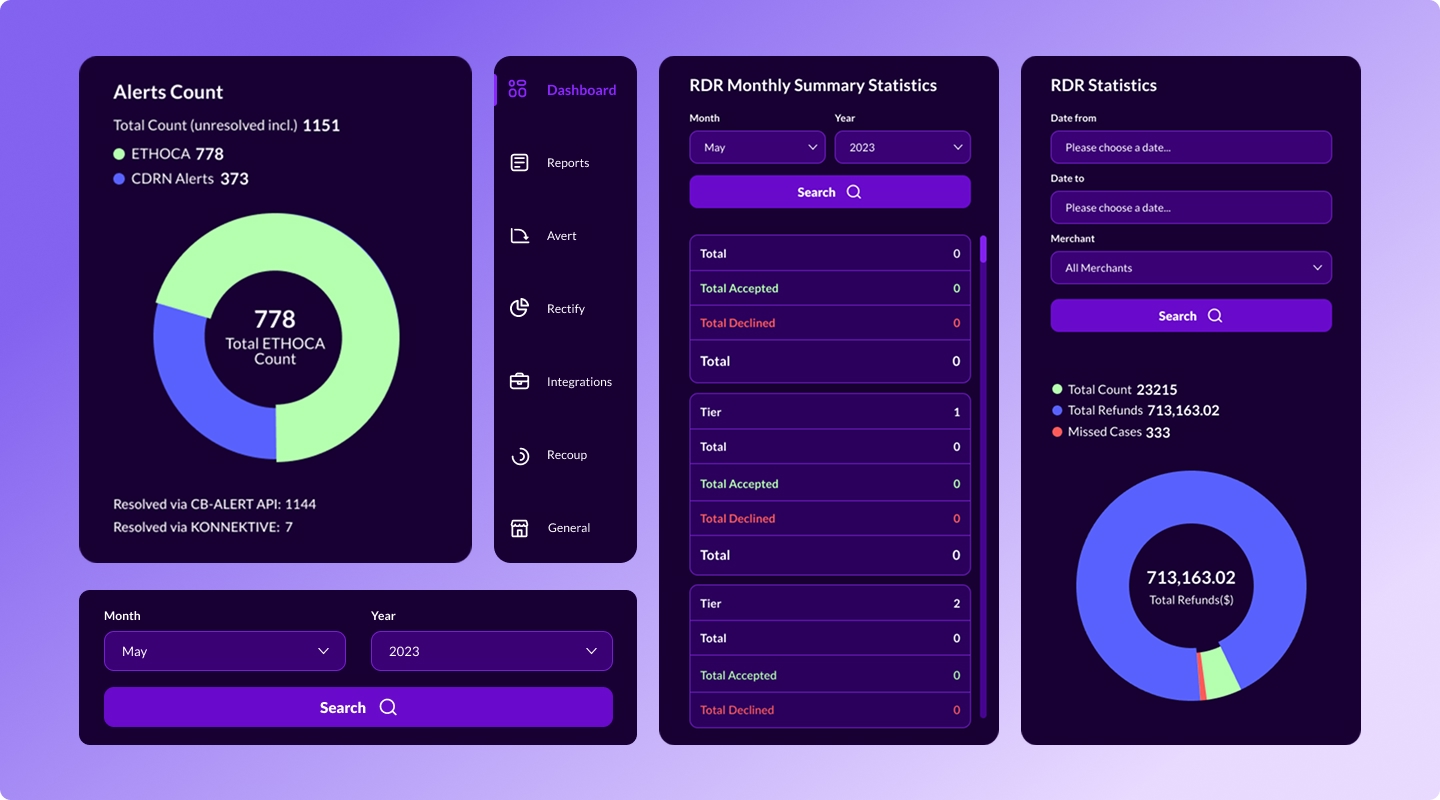
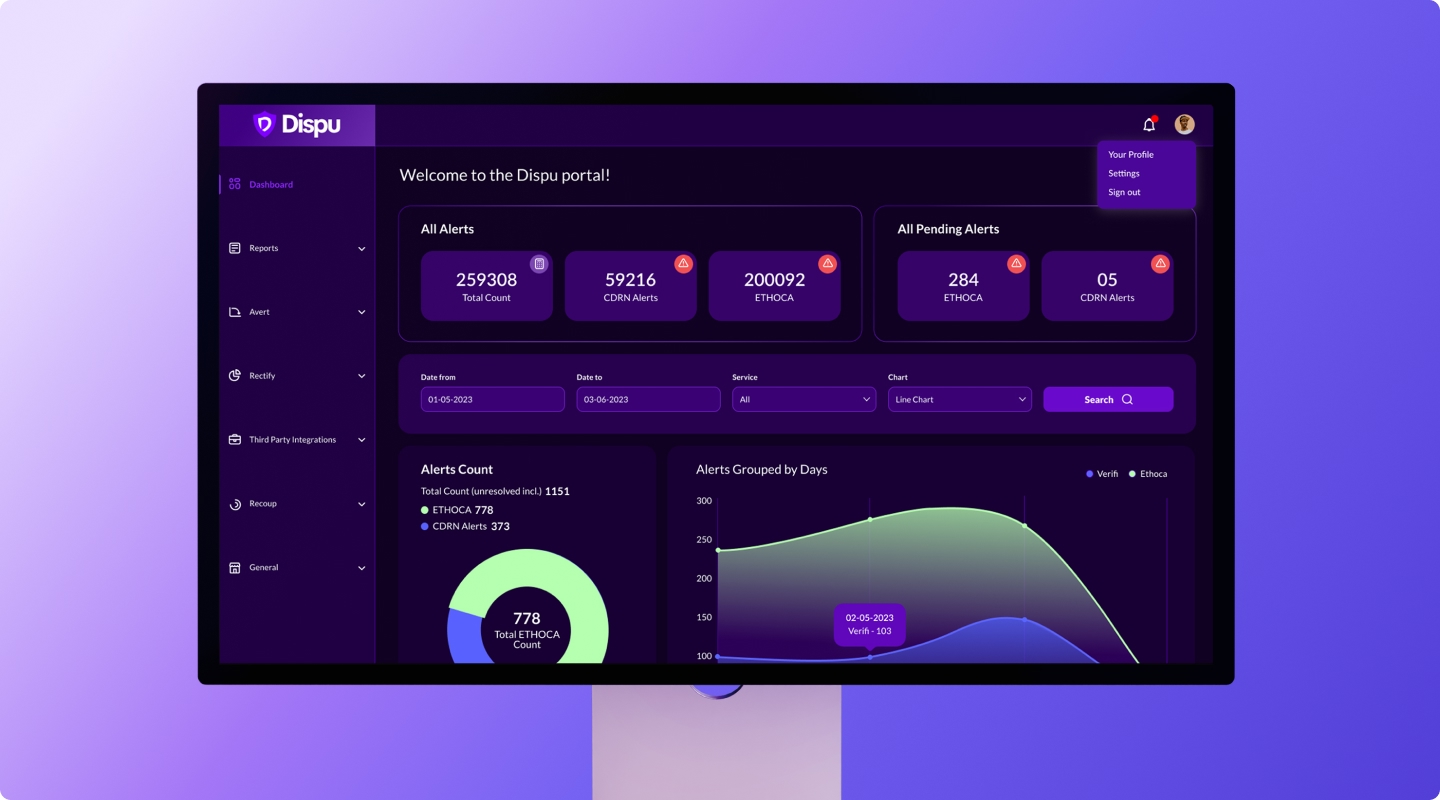
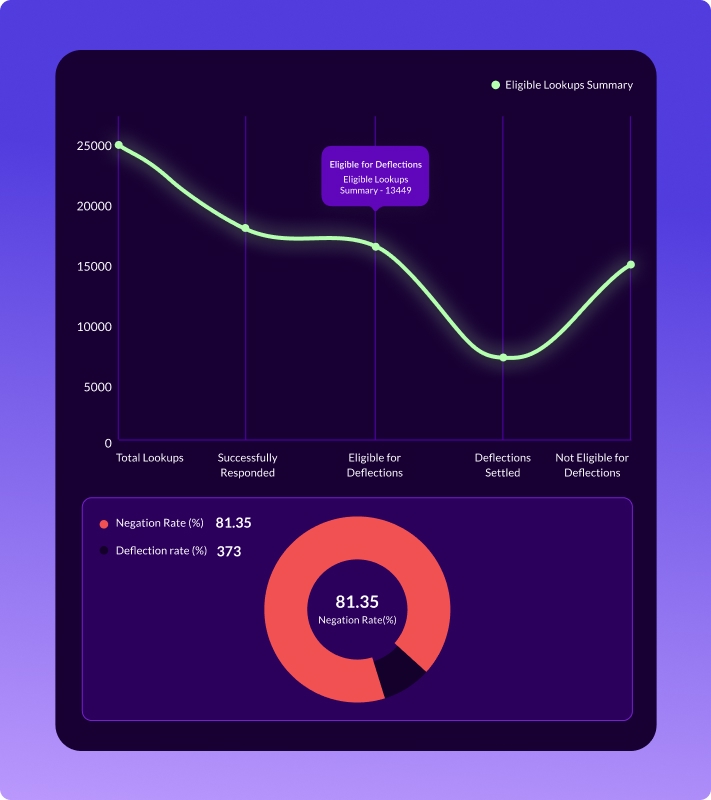
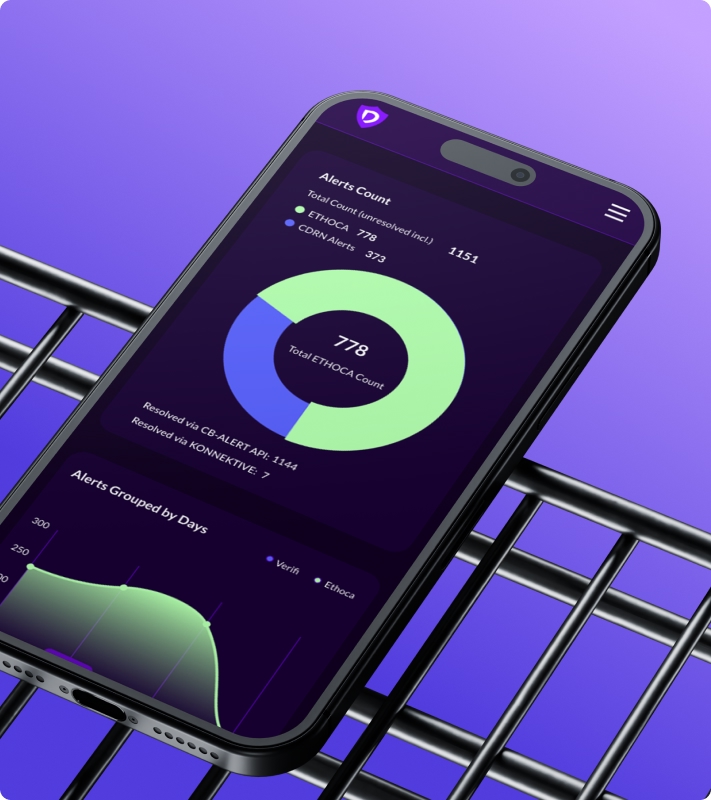
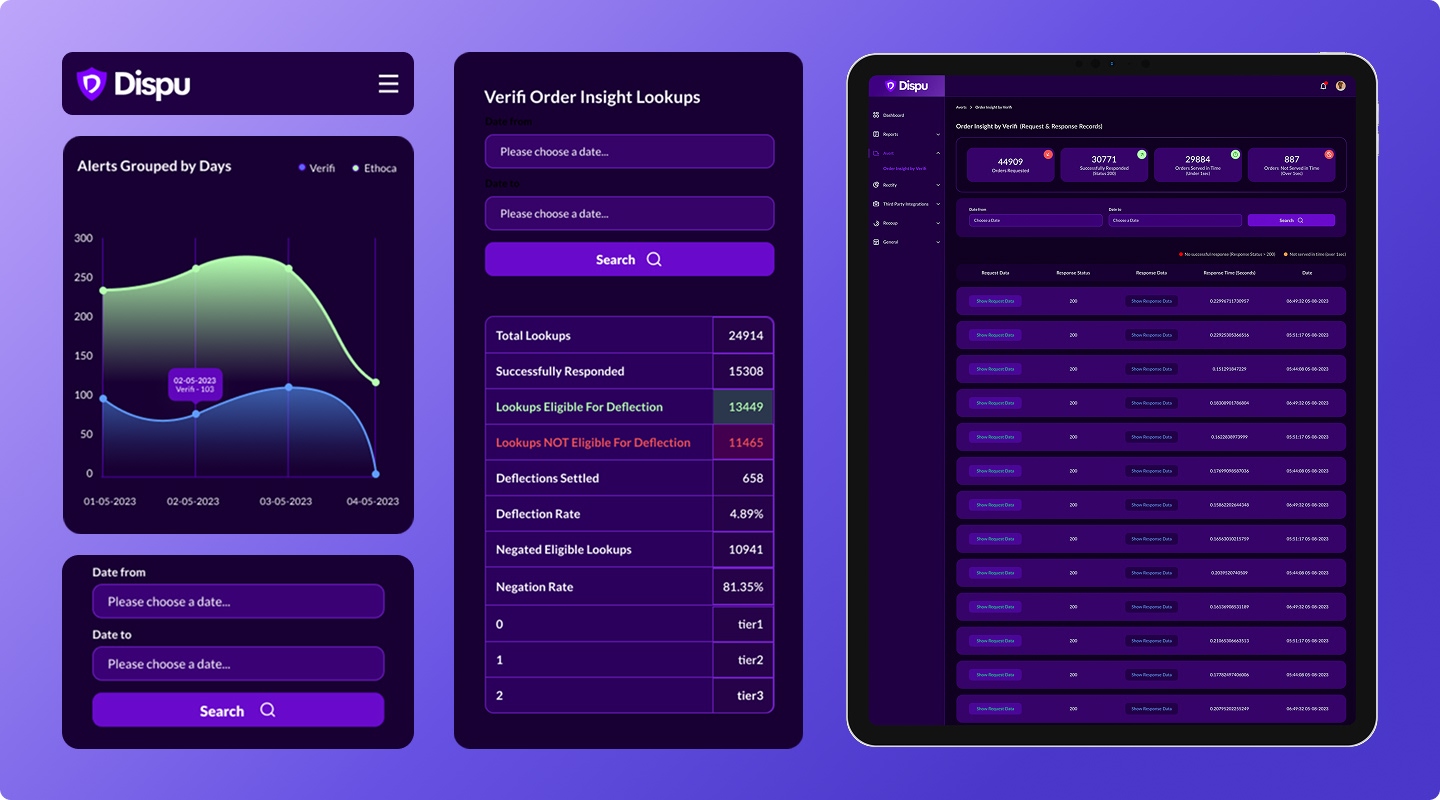
The final UI reflects a modern fintech identity, balancing depth and clarity. The dark indigo foundation enhances data contrast while vibrant accents highlight key metrics and actions. Data visualizations were carefully designed to remain informative without overwhelming the user, maintaining both functional precision and visual sophistication.
Data-first interface prioritizing key KPIs and performance metrics \ Structured dashboard layout to reduce cognitive overload \ Clear visual hierarchy guiding users from overview to action \ High-contrast color accents to highlight critical alerts and metrics \ Modular card-based system for scalable analytics display \ Clean data visualization patterns for trend tracking and ROI analysis \ Simplified dispute workflow with step-by-step clarity

Responsive Design
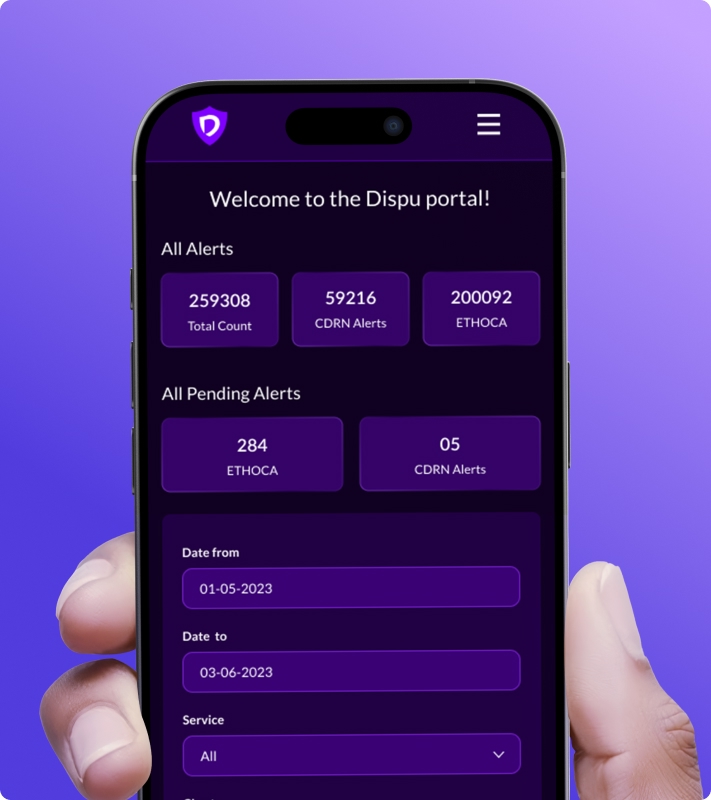
The application was optimized across desktop and tablet environments to ensure accessibility for merchants managing disputes on multiple devices. Layouts were adapted to preserve KPI hierarchy, maintain chart readability, and ensure interaction clarity across screen sizes.
Maintaining chart legibility on smaller screens \ Collapsible side navigation for tablet view \ Adaptive data tables with horizontal scroll behavior \ Preserving KPI prominence across breakpoints \ Touch-friendly controls for mobile dashboard interaction \ Maintaining performance despite data-heavy screens
Final Outcome
Delivered a modern, data-driven chargeback management platform that simplifies dispute workflows, enhances visibility, and empowers merchants to reduce fraud-related losses efficiently. Created a data-driven fintech platform that simplifies complex dispute processes, enhances operational efficiency, and strengthens merchant control over chargebacks.
Fintech dashboards require a disciplined hierarchy \ Data density must be balanced with readability \ Automation UX must feel intuitive, not technical \ Visual trust plays a critical role in financial platforms