
NetValve
NetValve is a secure online payment platform built to simplify digital transactions for individuals and businesses. It enables users to manage payments, track transactions, analyze financial data, and generate invoices through an intuitive, data-driven dashboard experience.

Project Overview
NetValve is a secure and intuitive online payment platform designed to simplify digital transactions for both individuals and businesses. The platform enables users to send and receive money seamlessly through card payments and direct bank transfers, while offering transparency, speed, and reliability. A key focus of the product is its transaction management dashboard, which provides users with clear insights into payments, analytics, and invoice generation-helping businesses manage finances efficiently and confidently.
Problem Statement
Managing digital transactions can be overwhelming for users and businesses due to unclear data presentation, complex workflows, and lack of transparency. Existing platforms often fail to provide a clear overview of transactions, analytics, and financial insights in one place.


User Experience Process
The initial phase focused on understanding user expectations from payment platforms and dashboards. Competitive analysis was conducted on leading fintech and payment products to identify best practices in data visualization, navigation, and usability.
Key insights
Users need instant visibility of transaction status \ Dashboards should prioritize clarity over density \ Analytics must be visually simple yet informative
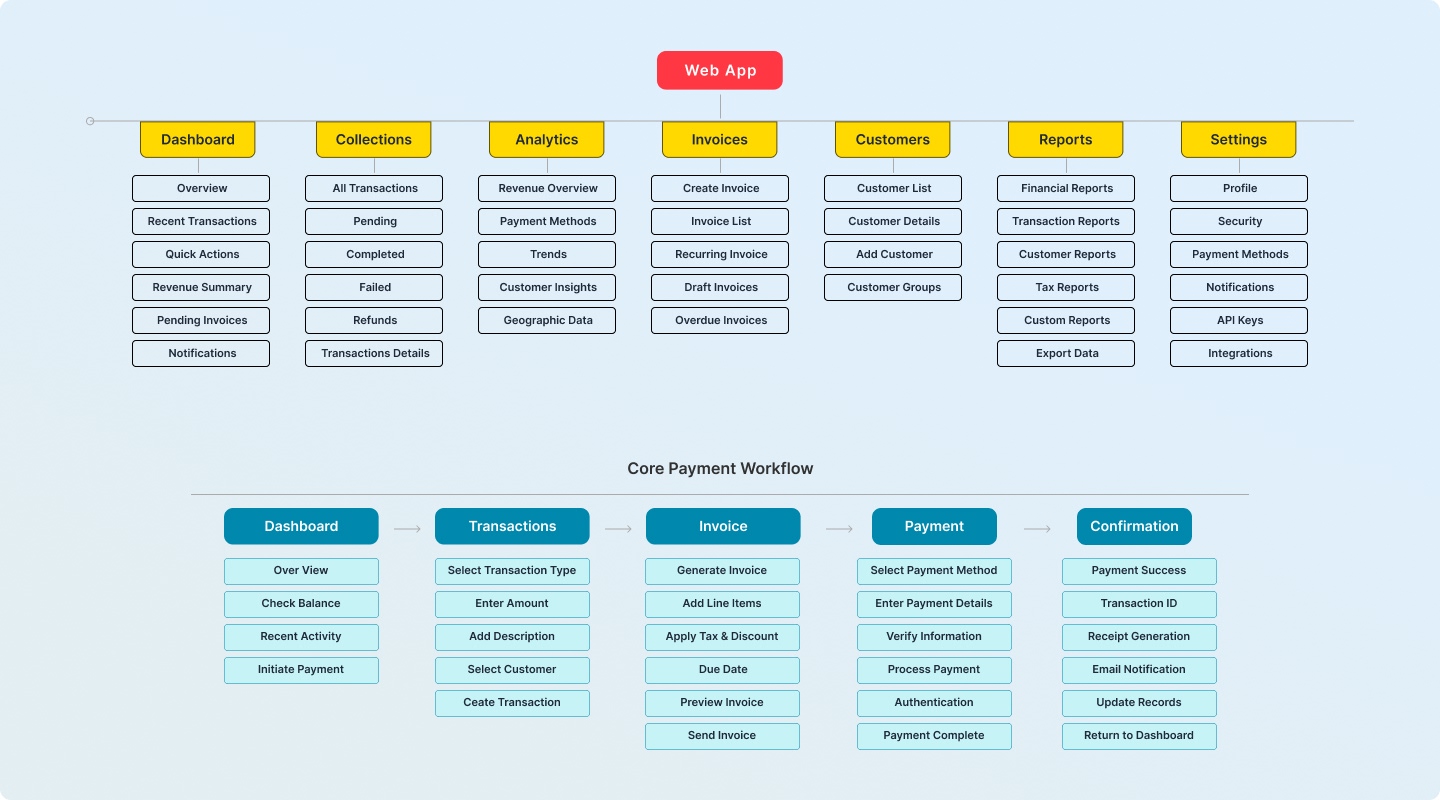
A structured information architecture was created to organize the platform into logical sections such as dashboard overview, transactions, analytics, invoices, and settings.
This helped ensure
Clear separation between transaction management, analytics, and account settings \ Intuitive navigation across dashboard modules \ Faster access to critical financial data and reports \ Structured flow for payment processing and invoice management \ Reduced cognitive load for users managing multiple transactions \ Scalable architecture for adding future financial tools and integrations \ Consistent user experience across different platform sections
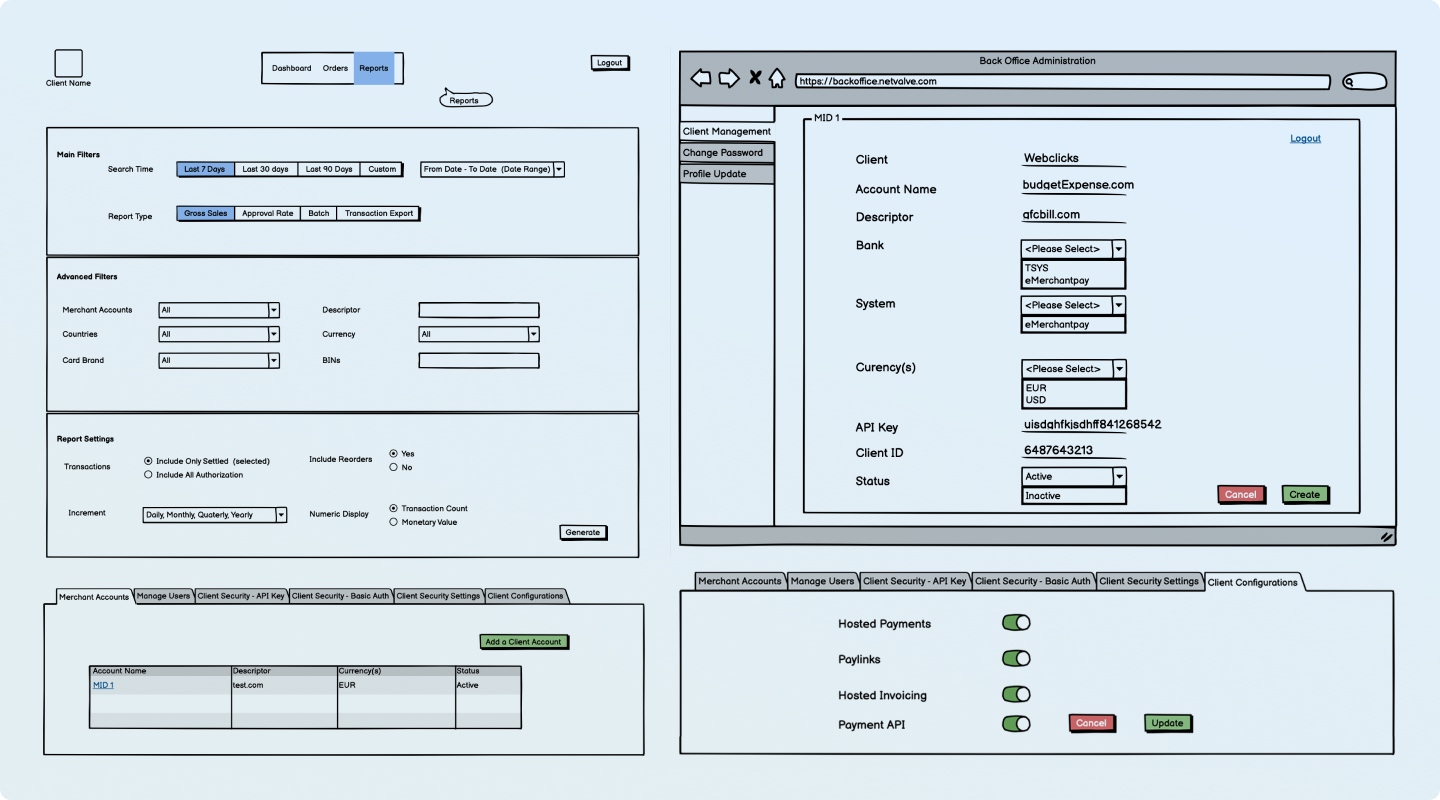
Low-fidelity wireframes were developed to map out the dashboard layout, data placement, and interaction flows. This stage focused on usability and content prioritization rather than visual aesthetics.
Wireframes covered
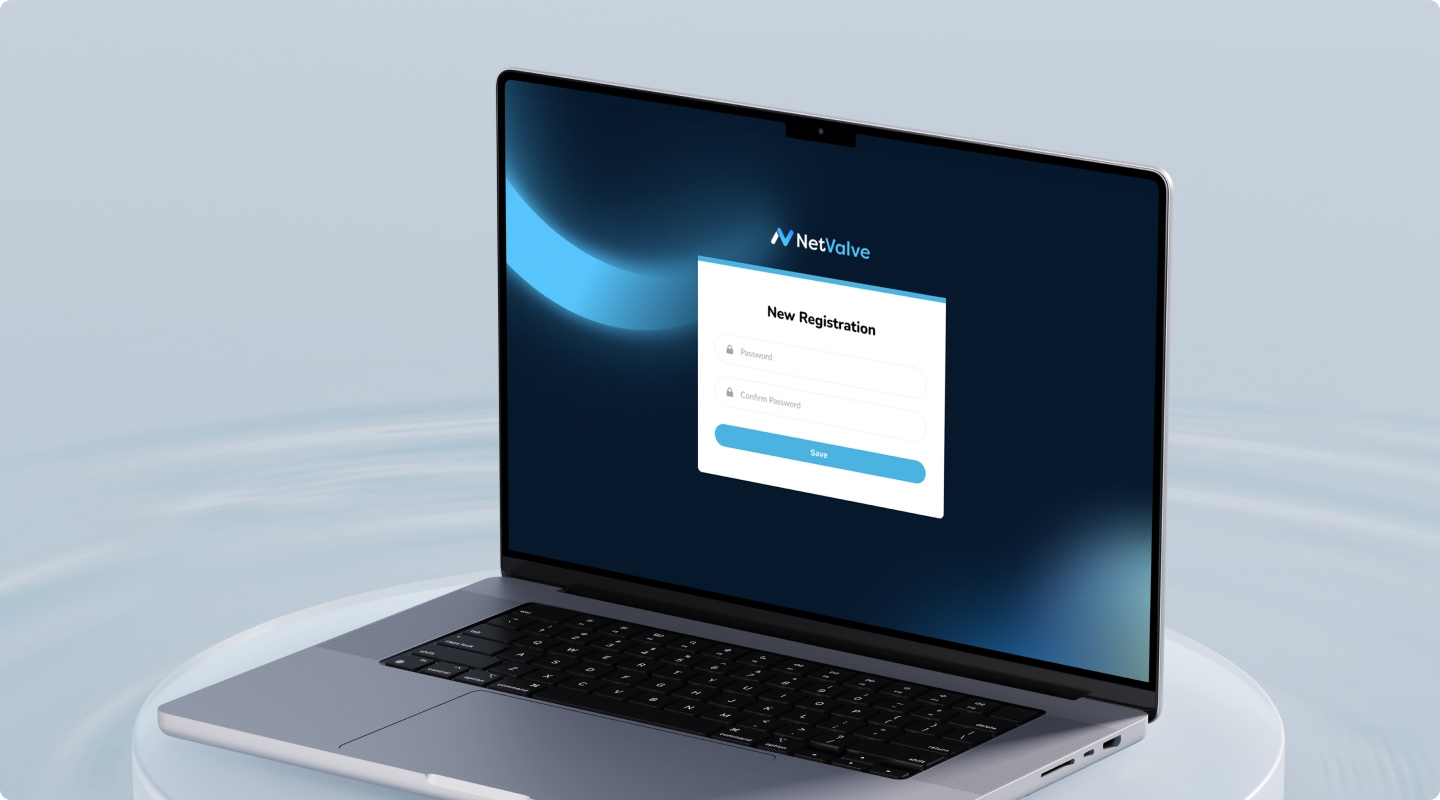
User login and authentication flow \ Main dashboard overview with key financial metrics \ Transaction history and detailed transaction view \ Send and receive payment flow \ Invoice creation and invoice management screens \ Payment method management (cards and bank accounts) \ Analytics and reporting dashboard
Design System
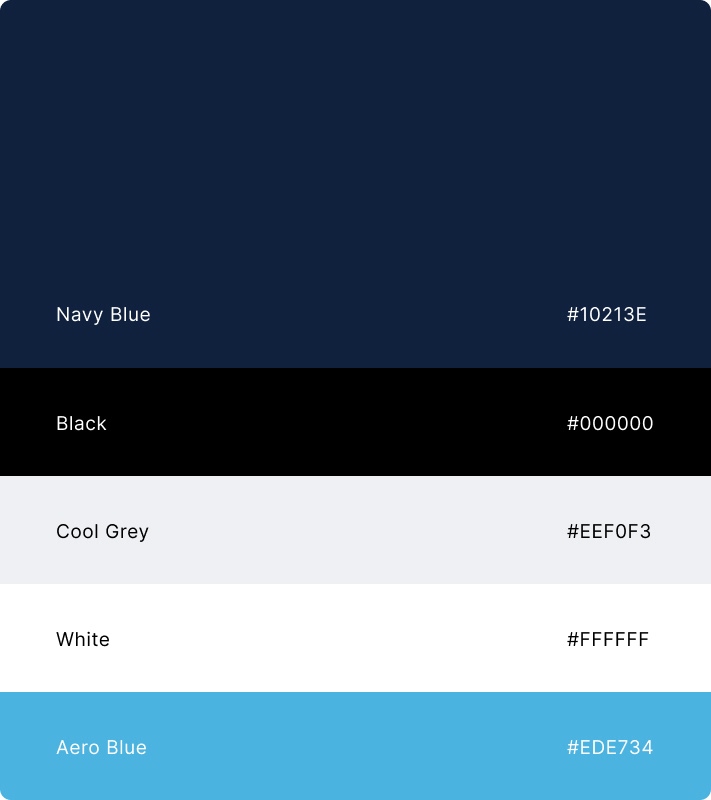
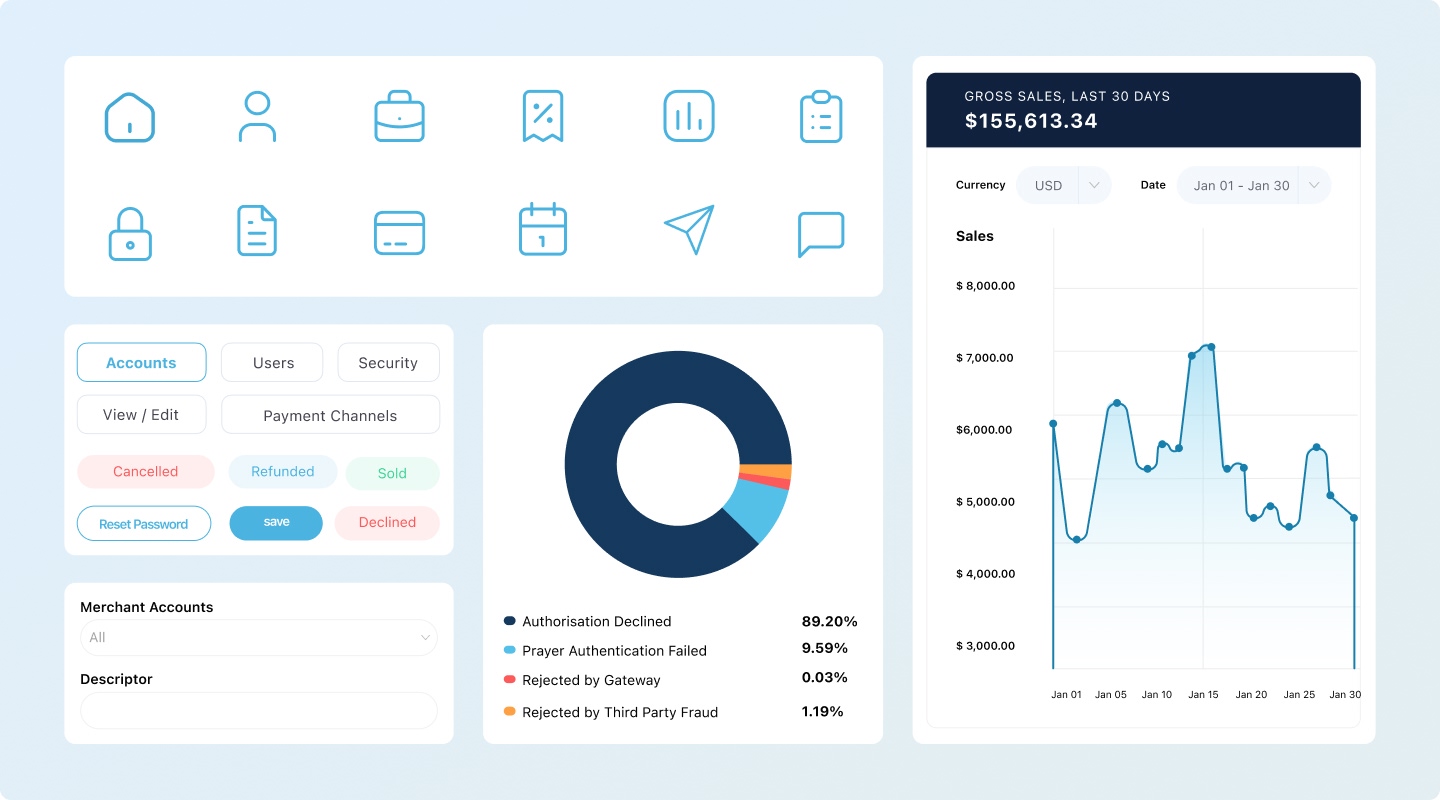
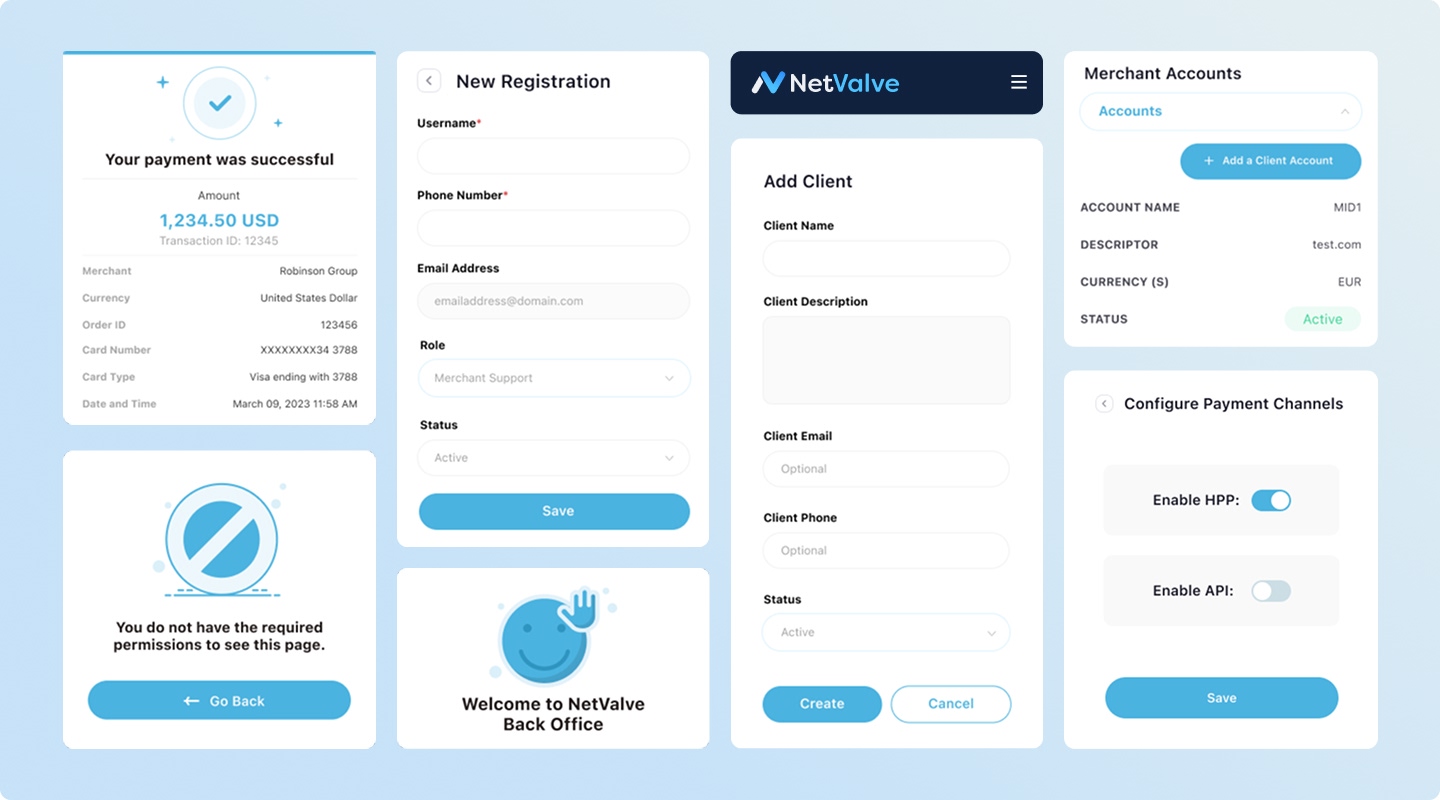
A structured design system was developed to maintain consistency across the platform while supporting complex financial workflows. The system focused on clarity, usability, and scalable UI components to ensure a smooth and efficient dashboard experience.
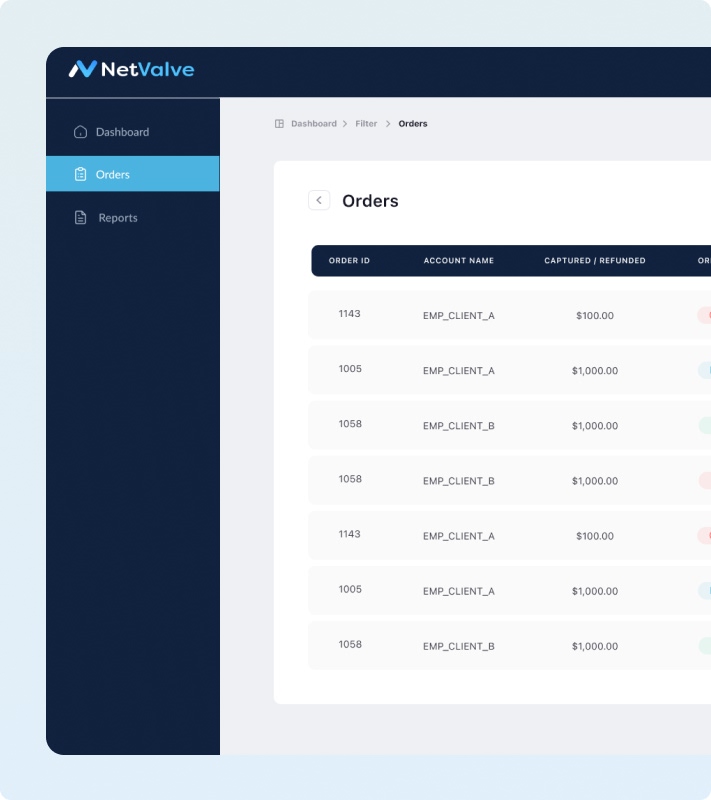
Defined typography hierarchy for financial data and UI content \ Structured color system for actions, alerts, and transaction states \ Consistent button styles and CTA patterns \ Reusable dashboard components and cards \ Data tables and transaction list components \ Form elements for payments and invoice creation \ Notification and alert UI patterns \ Icons for financial actions and system status \ Modular grid and spacing system for dashboard layouts

UI Design
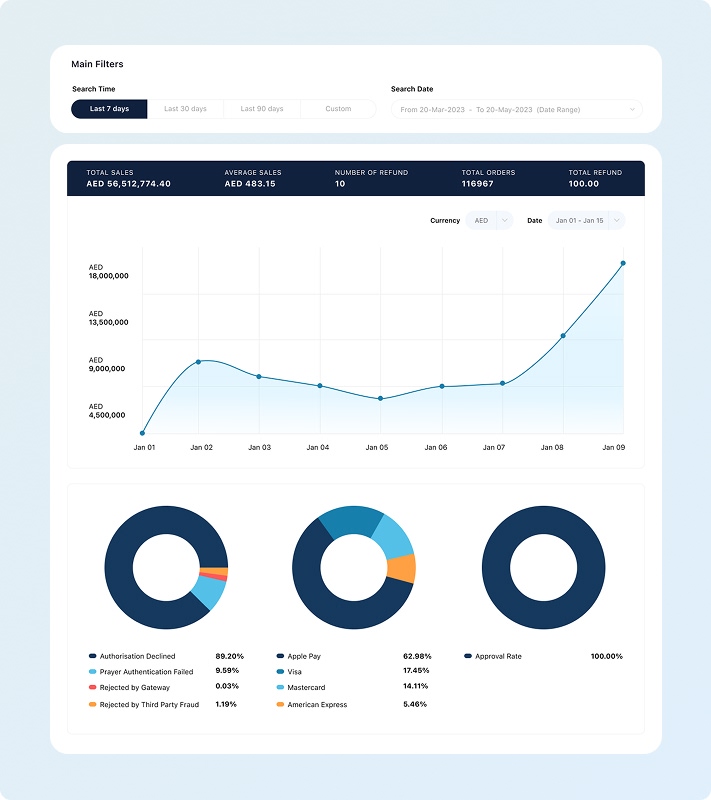
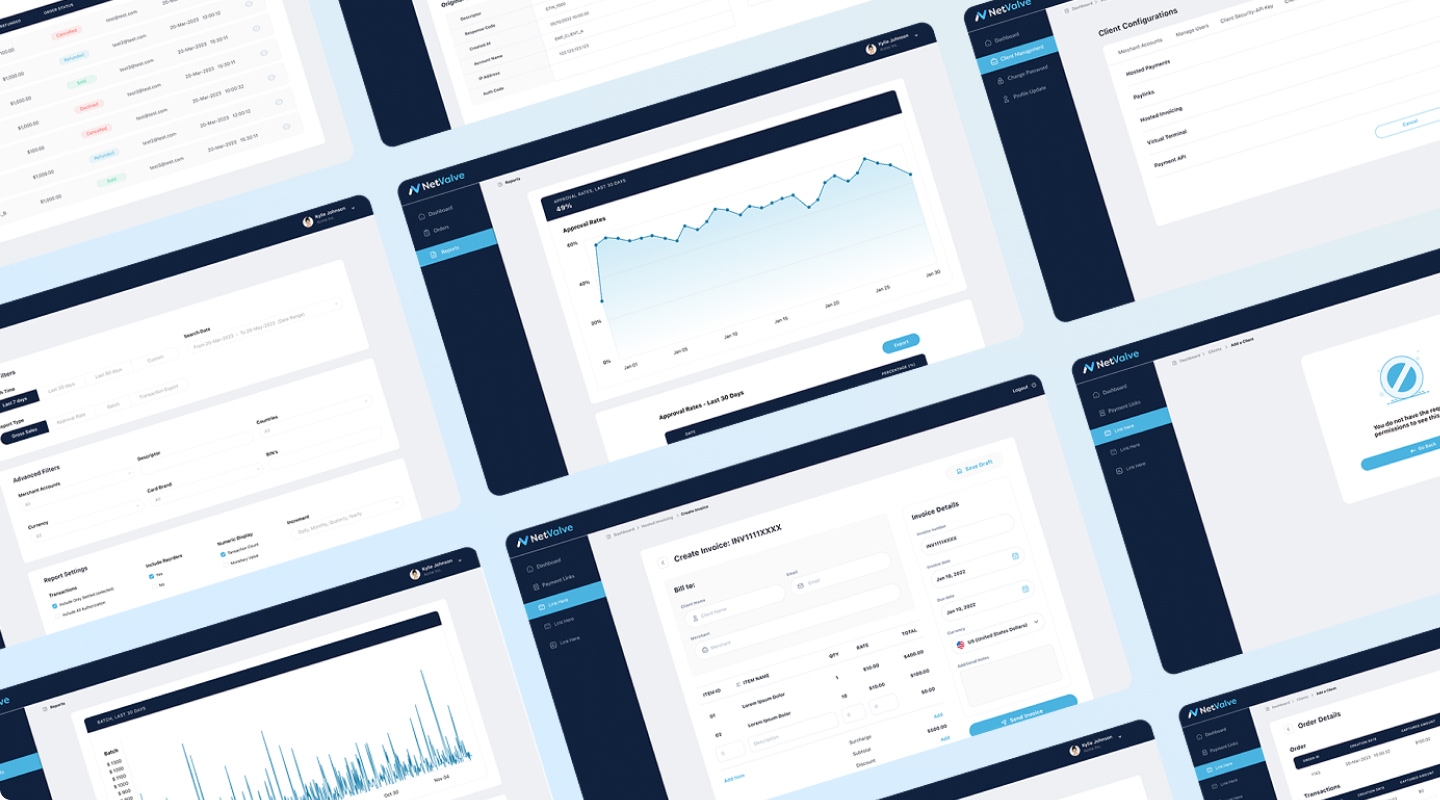
High-fidelity UI designs were created with a strong emphasis on clarity, professionalism, and usability. The dashboard presents financial data using charts, cards, and tables to ensure users can quickly interpret information.
Clean and minimal dashboard layout \ Clear data visualization for analytics \ Consistent interaction patterns Responsive design across screen sizes
Responsive Design
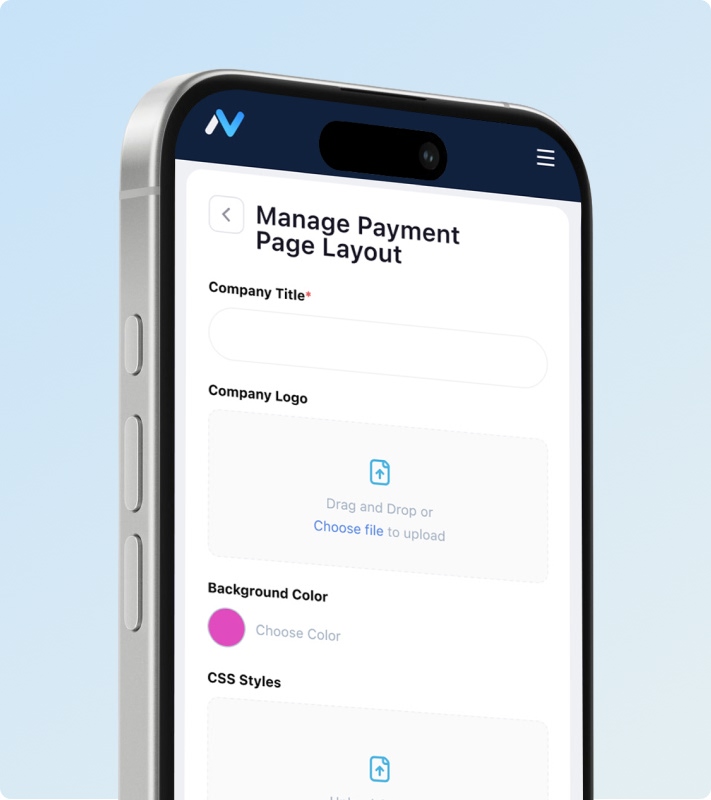
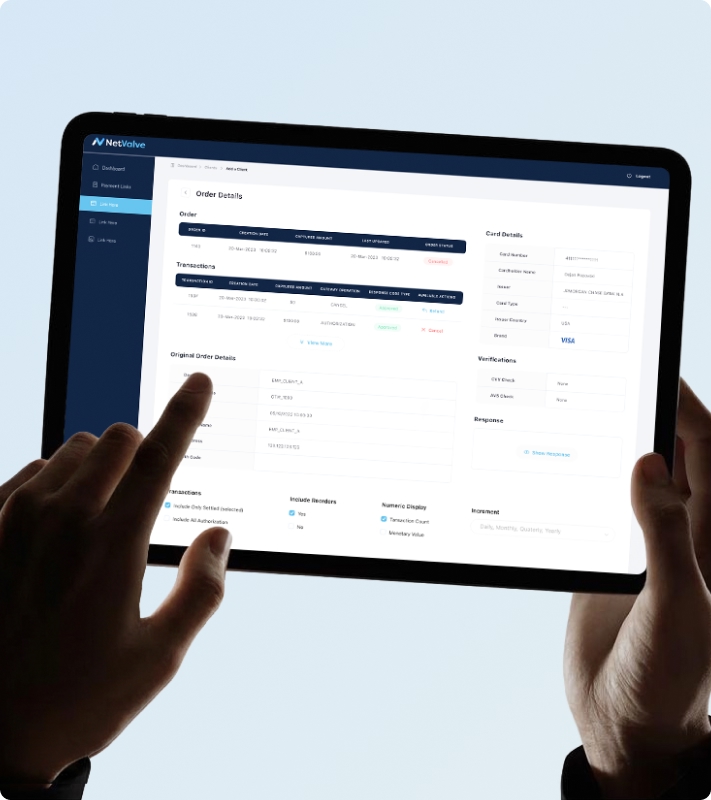
The platform was designed to work seamlessly across desktop, tablet, and mobile devices. Special attention was given to dashboard responsiveness to ensure data remains readable and usable on smaller screens.
Adaptive Data Visualization \ Content Prioritization on Mobile \ Flexible Grid System \ Touch-Optimized Interactions \ Collapsible Navigation \ Readable Data Tables \ Performance Consideration
Final Outcome
The final NetValve dashboard delivers a secure, intuitive, and data-driven experience that simplifies transaction management. Users can confidently monitor payments, analyze performance, and generate invoices from a single unified interface. The scalable design system ensures the platform is ready for future enhancements while maintaining consistency and usability.
Dashboard design requires strong hierarchy and prioritization \ Financial data must be visually clear to build user trust \ A well-defined user strategy simplifies complex workflows \ Design systems are essential for scalable SaaS products